Vienna’s Coffeehouse Culture Isn’t Just Tradition—It’s a Masterclass in Slow Living
Vienna’s coffeehouse culture shows how tradition evolves into a masterclass in slow living. Sitting in these spaces has become part of my own routine, from finding favorite corners for coffee to watching conversations stretch without hurry. Their UNESCO recognition confirms what daily life already shows, that these cafés define the city as much as its palaces and concert halls.
This post may contain affiliate links that may earn us a commission. For more information, see our Disclosures.
Many still keep the charm of another time, but one thing I love is how the menus now offer newer coffee options and dishes that feel fresh while staying true to the classics. That mix of old and new is what keeps me excited to revisit different cafés and see how each one puts its own spin on tradition.
Origins And UNESCO Recognition
Vienna’s coffeehouse culture dates back to the 1680s, when Johannes Diodato, an Armenian merchant, opened the first official café in the city. Over time, these spaces became gathering points for writers, artists, and thinkers who gave them a strong place in the city’s cultural life.
In 2011, UNESCO recognized this tradition as intangible cultural heritage, noting how a coffeehouse is a setting where time and space can be spent freely while only coffee appears on the bill. Even now, sitting in a coffeehouse means joining a habit that has been central to life in Vienna for generations.
How Coffeehouses Shaped Slow Living
What makes Vienna’s coffeehouses different is how they’ve always worked like public living rooms. You could read the paper, write, talk, or play cards, and nobody expected you to move on quickly. That setup turned passing time into part of daily life, and it’s why the cafés became known for ideas and conversation just as much as for coffee. Writers and artists made them their base, which only added to the culture that still defines them today.
That background is also why slow living feels natural here. Even on busy days when I’m running errands, stepping into a café almost automatically makes me slow down. The pace changes the moment you sit with a coffee, and you notice how the space is built for staying put rather than rushing out.
Distinctive Ambiance And Design
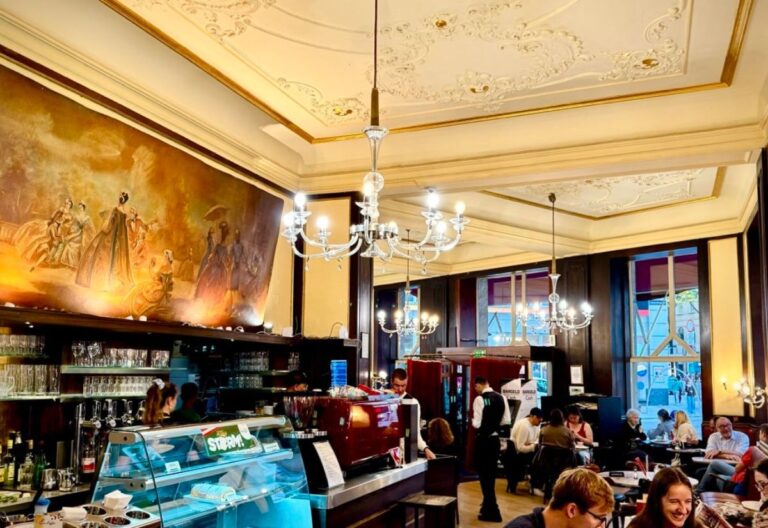
Vienna’s coffeehouses are known for their interiors, and it’s often the first thing you notice when you step inside. Marble tables, bentwood chairs, chandeliers, and newspaper stands are part of the tradition, bringing together formality and comfort in the same room. Many cafés also have high ceilings and dark wood details that give them a steady, timeless feel without being overwhelming.
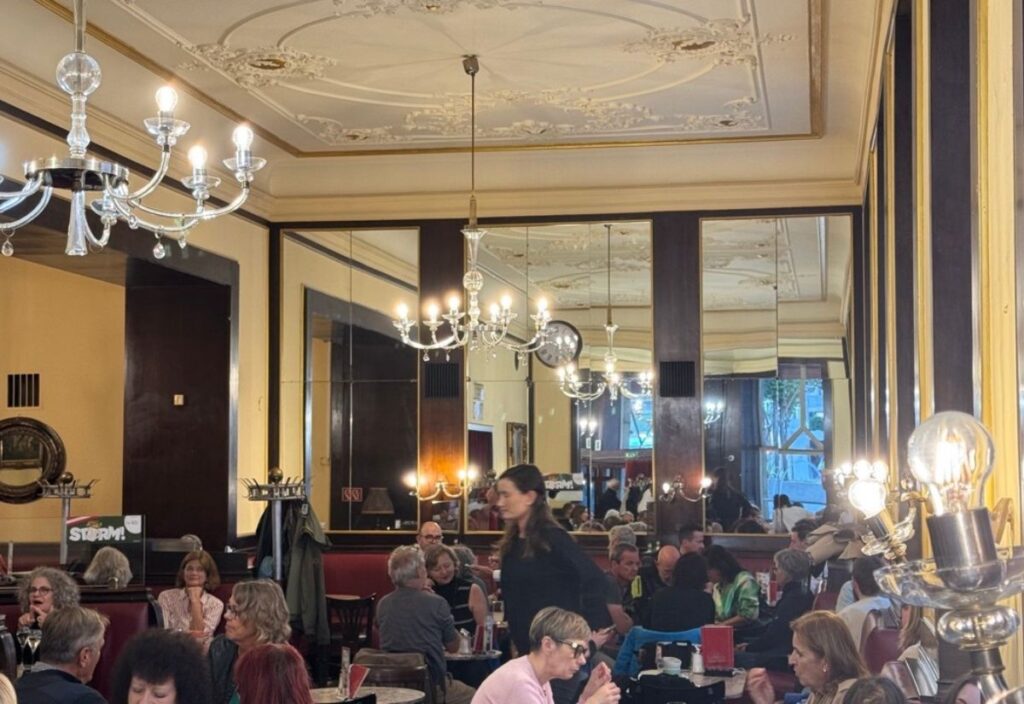
These spaces may look elegant, but they never feel closed off or unwelcoming. It’s so easy to sit down and relax, whether you stop for a quick espresso or spend part of the afternoon reading. When you visit, don’t just focus on the coffee. Have a look around and enjoy the moment, because the surroundings itself is a big part of the experience.
Iconic Cafés Still Open Today
Some of Vienna’s oldest coffeehouses remain open, and they’re a big part of why I never get tired of this city. Café Central, which opened in 1876, is often busy with visitors, but I still find myself coming back when I want a slice of Apfelstrudel. Café Landtmann, dating to 1873, has the reputation of being the city’s most elegant coffee spot, and I highly recommend it when you want to see how polished the traditions here can be.
Some of my mornings start at Café Schwarzenberg, which first opened in 1861 and remains one of the oldest on the Ringstraße. The service is unhurried, the breakfast is simple and classic, and it’s the kind of place where sitting for an extra coffee feels natural. These coffee shops show how history and routine meet in Vienna, and visiting more than one will give you a clear idea of why the culture still matters today.
Culture, Conversation, And Creativity
Vienna’s coffeehouses have long doubled as meeting places, especially for artists, musicians, and writers. The Young Vienna movement in the late 19th century is a clear example, with its members using cafés as regular gathering spots. Newspapers were always part of the setup, and many of these places continue to keep local and international papers on wooden racks for anyone to pick up.
Even now, the role hasn’t really changed. You can sit down with a coffee, open a paper, and hear conversations moving easily from one table to the next. Reading, talking, and unhurried time are part of what keep these cafés relevant.
Balance Of Tradition And Modernity
Vienna has a way of holding on to its traditions while making room for what feels current, and nowhere is that clearer than in its cafés. For a taste of history, I often stop at Café Sperl, a spot that has been around since 1880 and still serves a classic melange that feels tied to the city’s past. The crowd there now includes students and travelers, and that mix gives it a welcoming energy without taking away from its charm.
If you want to see how the culture adapts, Café Ansari is a place I recommend. It brings Georgian touches into the Viennese café setting, proving that new ideas can sit comfortably alongside old customs. For anyone curious about how the city keeps its coffeehouse tradition alive while staying open to change, these spots are worth seeking out.
Where culture meets conversation
Vienna’s coffeehouse culture blends history, design, community, and modern adaptation into a lifestyle that still defines the city today. Recognized by UNESCO and carried forward by both historic institutions and newer interpretations, these cafés show how slowing down remains essential in an increasingly hurried world. They symbolize Vienna’s enduring identity as a place where conversation and reflection are as important as the coffee itself.
Zuzana Paar, a co-founder of Can Do Travel, is a seasoned traveler and writer who has explored 62 countries and lived in St. Lucia, Dubai, Vienna, Doha and Slovakia. Her work has been featured on Fox News, New York Daily News, MSN and more; she has also appeared live on Chicago’s WGN Bob Sirott Radio Show. When she’s not discovering new destinations, she shares travel tips and insider insights to help others experience the world in a unique and unforgettable way.